
Ghost Panels
Created in Collaboration with Harvester Advisor Captain Jason Jarvis
When fishing gear is lost, it can continue to trap fish, crustaceans, sea birds, and marine mammals in a phenomenon known as “ghost fishing”. This lost gear becomes what is known as “ghost gear”. Unfortunately, many lobster and trap crabs become ghost gear when the line is accidentally cut and traps are left on the ocean floor. To prevent lobster and crab traps from becoming ghost gear, some states require biodegradable “ghost panels”. These panels biodegrade over time, preventing lost traps from continuously ghost fishing.
Panels can be fastened with biodegradable material, whether that’s ferrous metal, cotton, hemp, sisal, or jute twine. In Massachusetts and Rhode Island, these panels are required with the following restrictions:
Size: The rectangular or circular opening must be at least 3 ¾” X 3 ¾”
Placement: The ghost panel must be located in the outer parlor of the trap, not the bottom.
Biodegradable Fasteners: Uncoated ferrous metal should be no greater than 3/32” and cotton, hemp, sisal, or jute twine should be no more than 3/16”
Materials:
Opaque marker or chalk
Pneumatic wire cutters
Ferrous metal (such as non-galvanized hog rings), cotton, hemp, sisal, or jute twine
Method 2 + 3: wooden panel and drill
Method 3: wooden panel and pliers
Instructions:
Measure a square (aim for at least 4” x 4”) and mark with chalk or opaque marker on the side of your trap, drawing on the wires.
Cut a square wire by wire at each marking using pneumatic wire cutters. Keep in mind that once these wires are cut, they’re sharp and can cut you if you’re not careful.
Method 1 (Use Existing Panel): Reattach the wire cutout with your ferrous metal wire or twine, cotton, hemp, or sisal. This will involve twisting and wrapping the wire or weaving the twine to secure the trap.
Method 2 (Wooden Panel + Twine): Cut out a wooden panel with a border 1” larger than your panel opening. Drill four small holes (1/4” diameter) on each side and attach to the panel opening with twine.
Method 3 (Wooden Panel + Hog Rings): Cut out a wooden panel with a border 1” larger than your panel opening. Drill four small holes (1/4” diameter) on each side, 1 cm from each corner’s border. Secure each corner with a hog ring to the trap sides, closing each ring with your pliers.
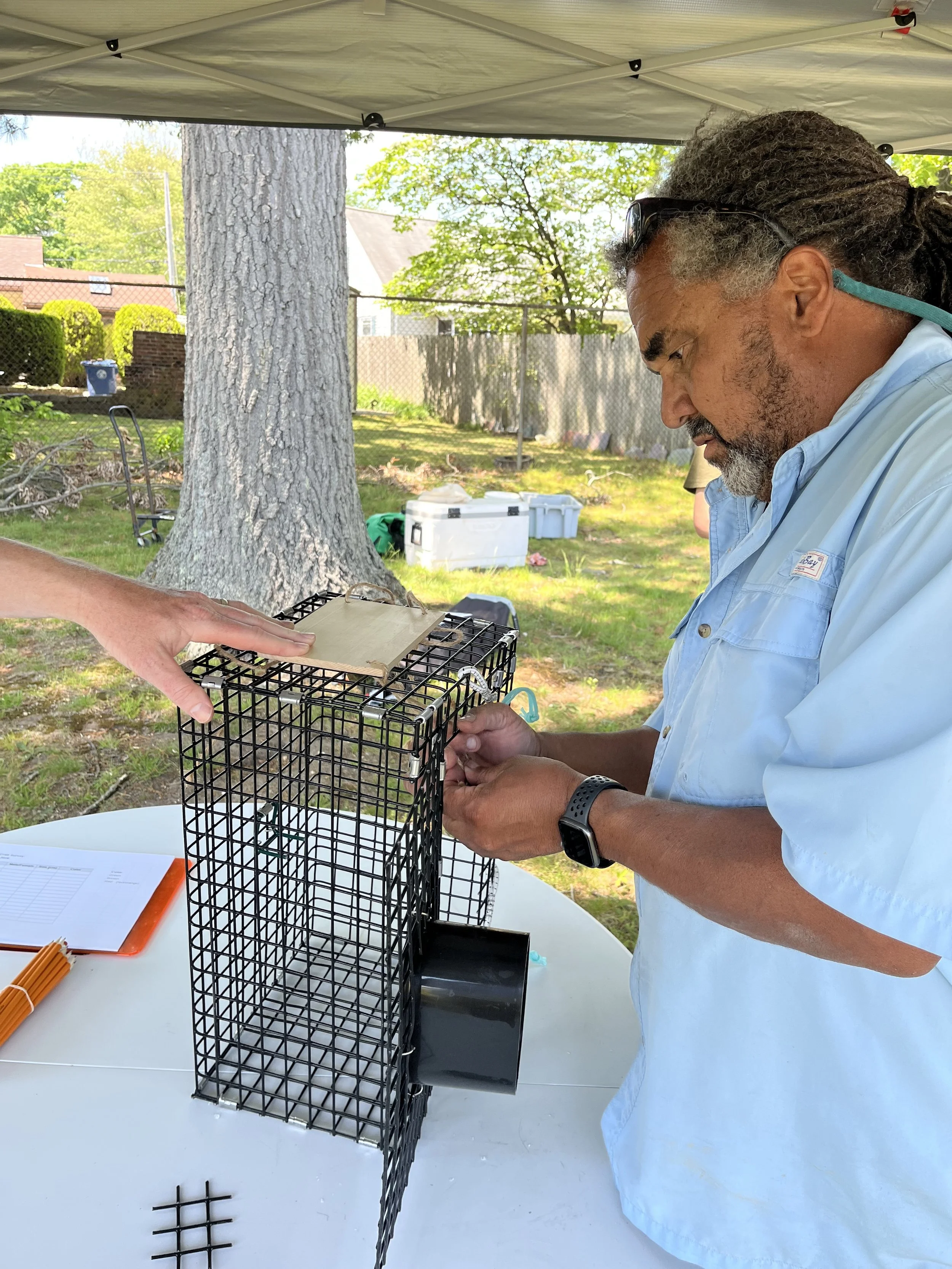
Method 2: Captain Jarvis secures a wooden ghost panel with twine to a crab trap for Warwick High School Crab Class
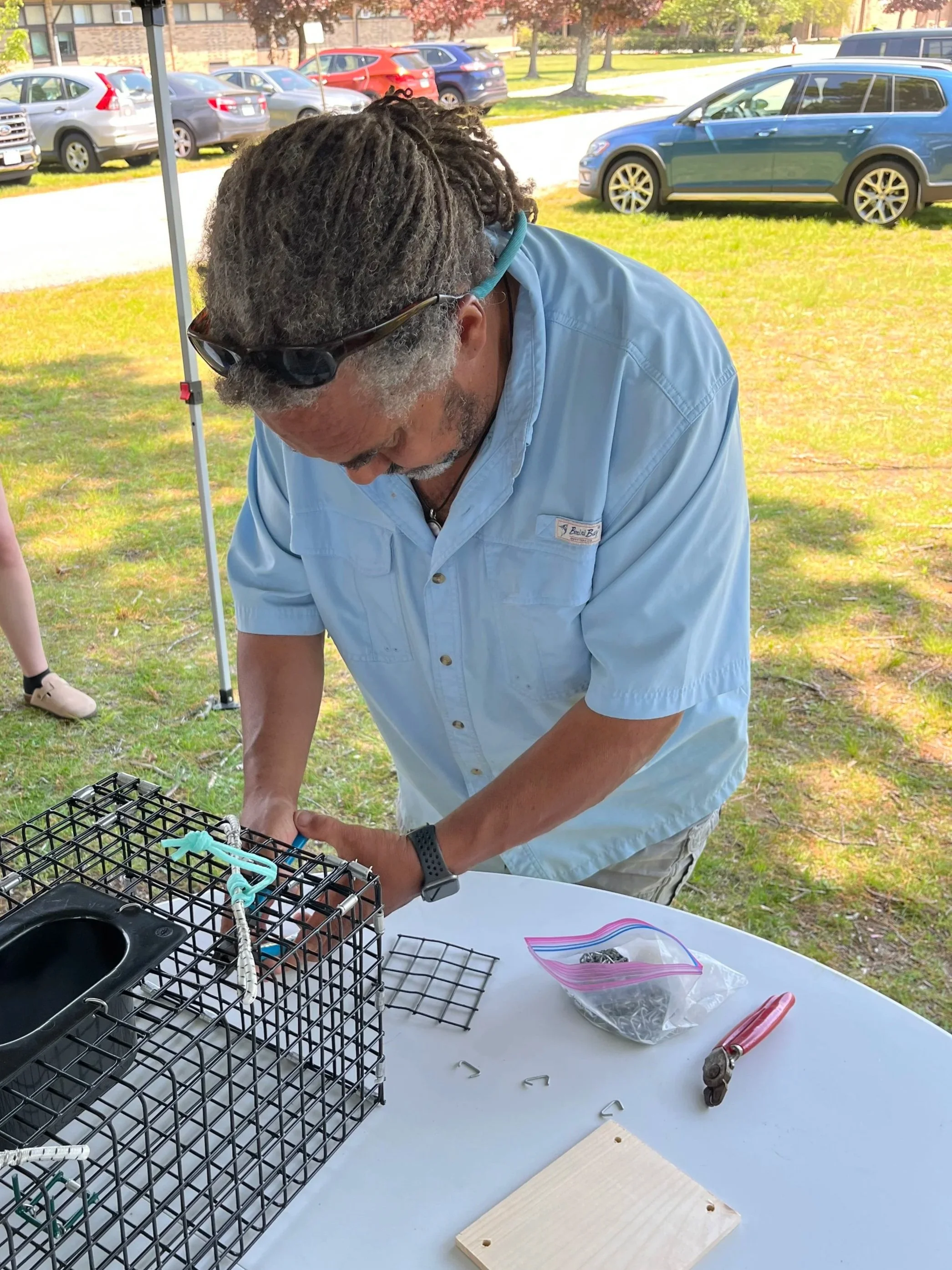
Method 3: Captain Jarvis secures a wooden ghost panel with hog rings to a green crab trap for Warwick High School Crab Class