
Meet the Harvesters x Center for Coastal Studies
The Center for Coastal Studies (CCS) is a non-profit organization dedicated to understanding, preserving, and protecting marine ecosystems and the coastal environment through applied research, education and public policy initiatives. Based on Cape Cod, CCS collaborates with local, national and international organizations and works with government agencies to promote environmental stewardship and develop policies and management strategies drawn from solid science. The Center’s Marine Fisheries Research program conducts community-based scientific research in partnership with fish and shellfish harvesters.
This past July, GreenCrab.org had the opportunity to trap green crabs with AmeriCorps Service Member Ella Wegfehrt and CCS Marine Fisheries Research Program Director Owen Nichols to learn more about their green crab research. Since 2021, CCS has been monitoring annual trends of green crab activity in an Outer Cape Cod salt marsh ecosystem in order to better understand the seasonal dynamics of this invasive species in relation to its threatened habitat and inform future mitigation strategies.
We had a chance to chat with Ella about CCS’s green crab research and trapping efforts as part of our ongoing Meet the Harvester series.
Before diving in, here are a few definitions that might be helpful for navigating this conversation:
Carapace: A large extension of the dorsal body wall that covers and protects the head and thoracic regions in crustacean species - ScienceDirect
Epibiont: An organism that lives on the body surface of another - Merriam-Webster
Terminal Molt: The final molt in the life cycle of an arthropod, after which the animal reaches adulthood and stops growing in size - Ohtsuchi & Kawamura, 2019
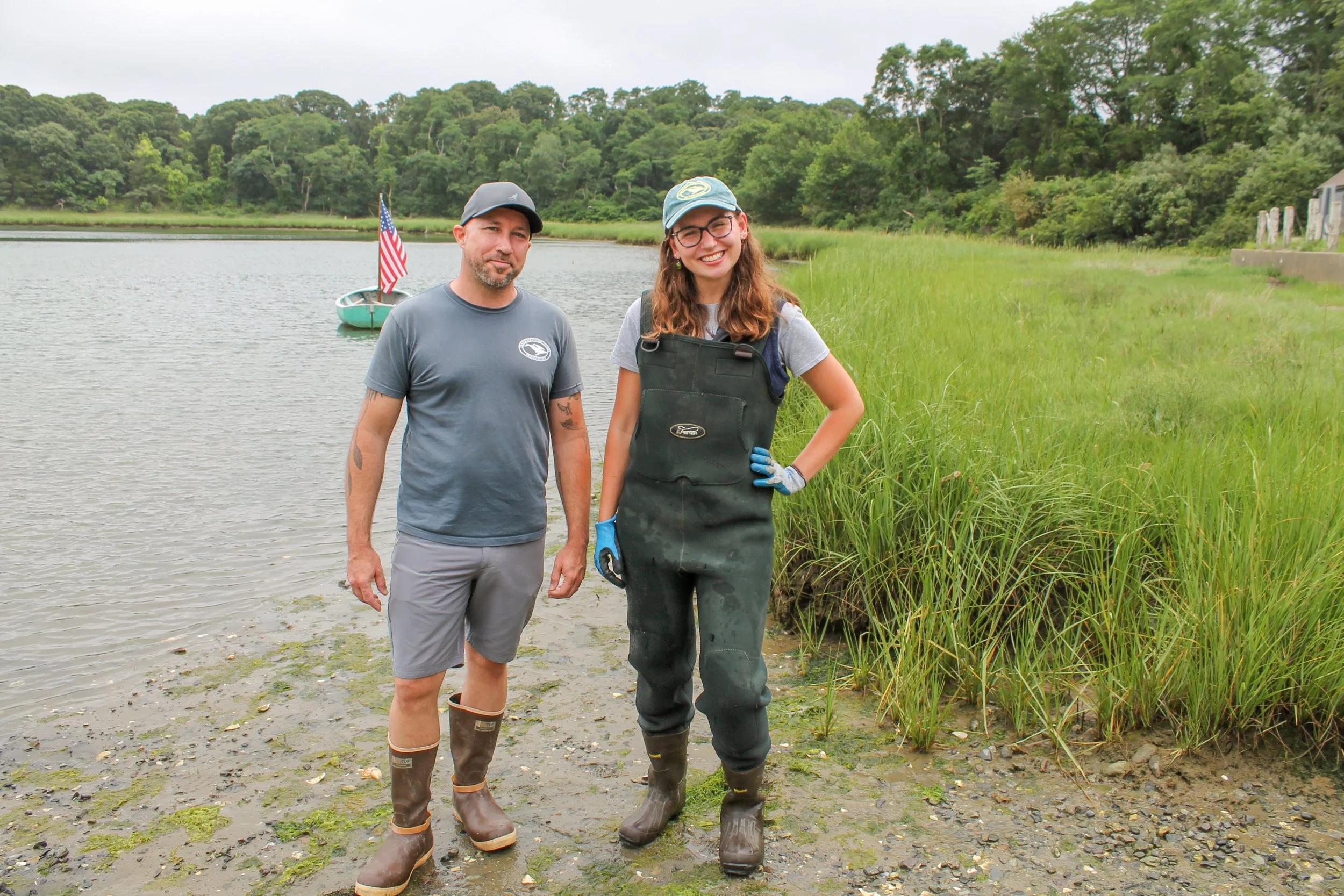
CCS Marine Fisheries Research Program Director Owen Nichols (left) and AmeriCorps Service Member Ella Wegfehrt (right) at Eastham Salt Pond
Q: Hi Ella, could you tell me a little bit about your research goals? What kind of data are you collecting?
We record a number of set demographic data categories, but we also often leave room to add/explore new ideas! We always take weather and temperature data, species (noting bycatch), abdominal coloration, carapace width, sex, and presence of eggs. This data serves as a useful tool to track change in the system over time. I have also recently started recording the presence of epibionts on crabs as a potential indicator of terminal molt status. I am interested in using this, and other factors to gain insight into the molt status and lifespan of Salt Pond green crabs.
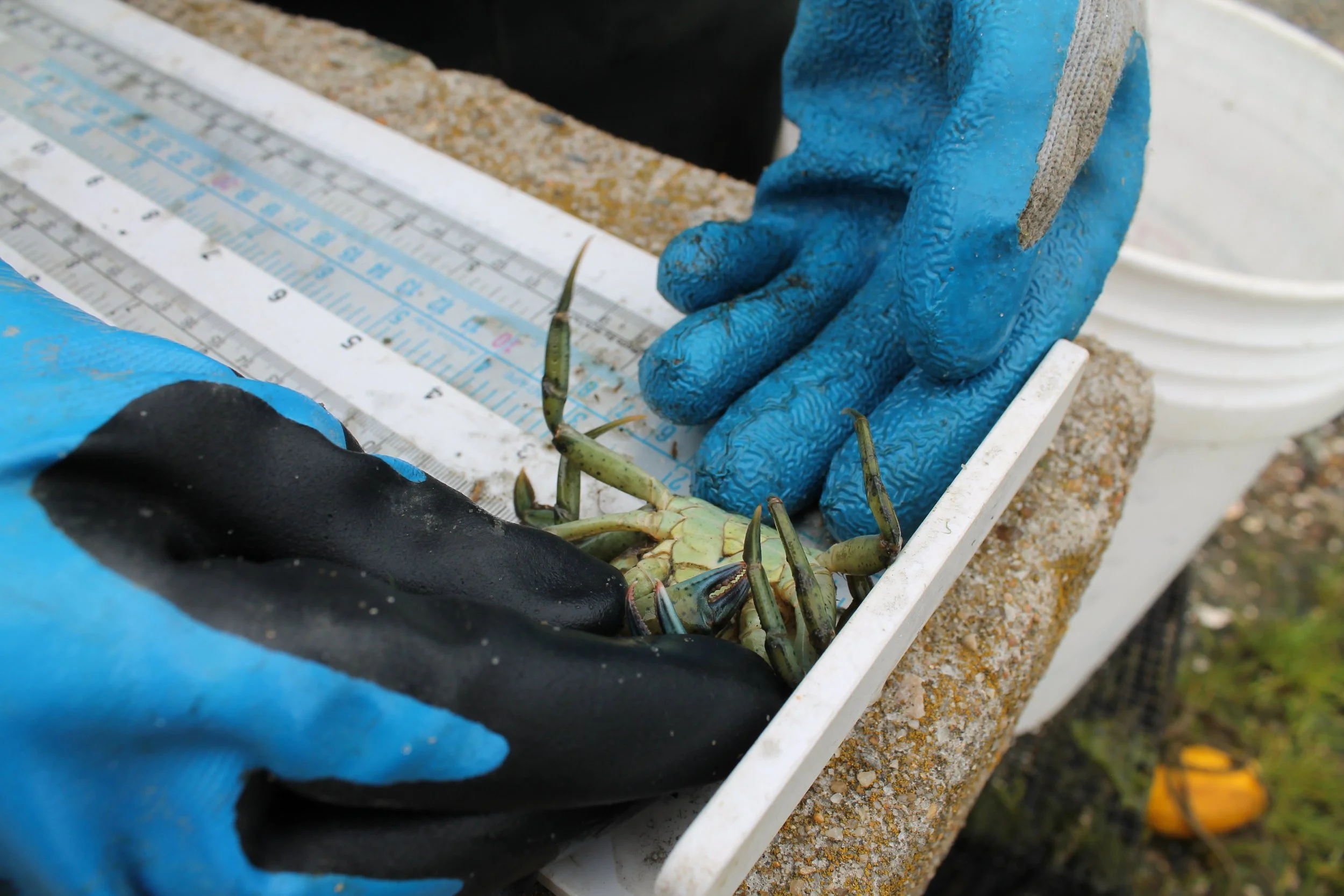
Ella measures the carapace width of a male green crab
Q: What types of traps do you use to catch green crabs?
We use one unbaited eel trap, set in the same place every week, to sample our green crabs. Eel traps are readily available, easy to handle for students and volunteers, and are already in use by several towns on Cape Cod for trapping green crabs, so data collected can be easily compared across areas. We catch enough green crabs for research without the need for bait.
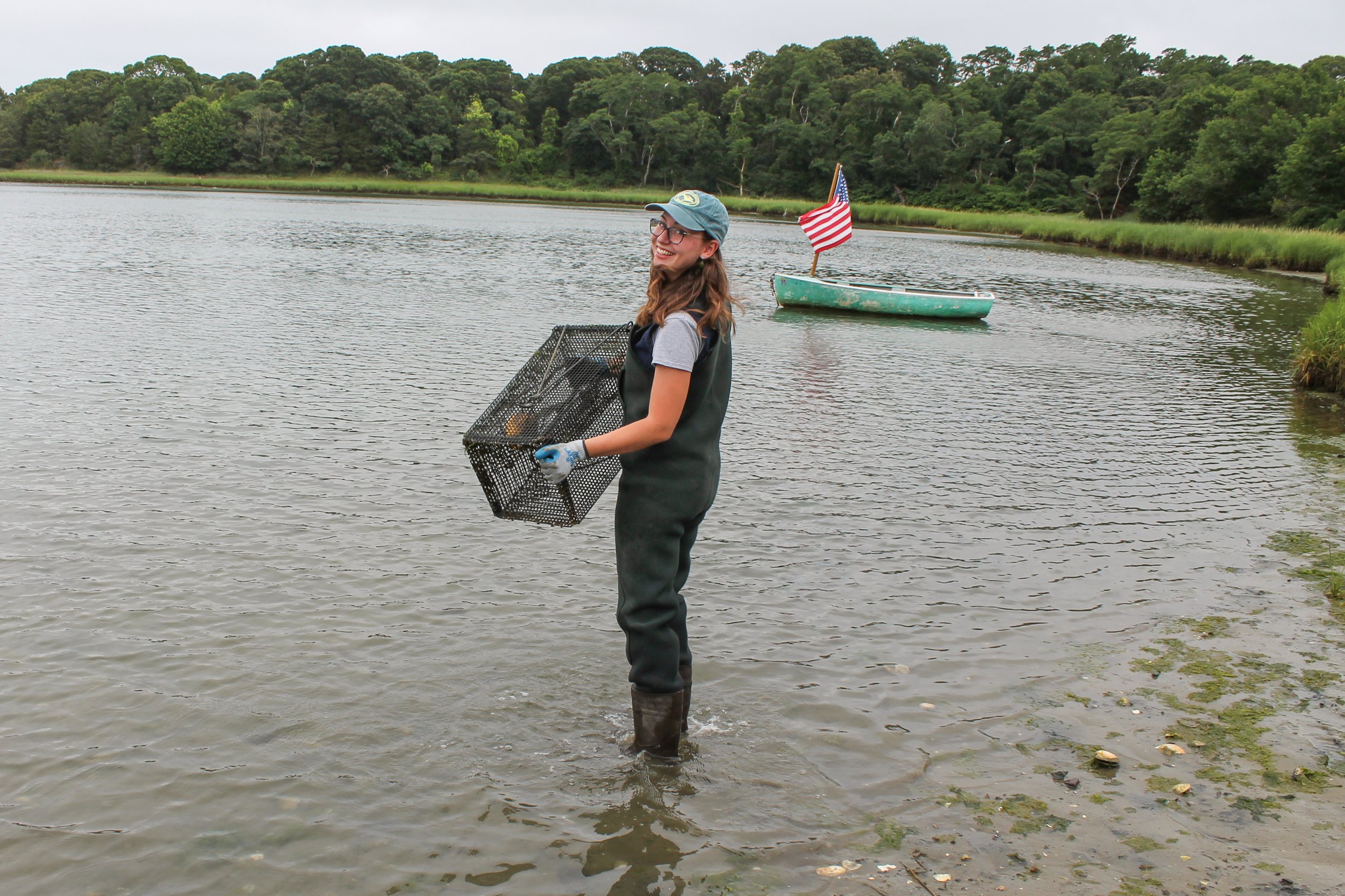
Ella tosses the eel trap back into Eastham’s Salt Pond
Q: What future research is needed to better understand green crabs’ impact on Cape Cod Ecosystems?
I would love to dig further into green crab behavior and interspecies interactions. Salt Pond is an incredible sampling location for its rich biodiversity – I am interested in learning more about how Salt Pond’s species interact and compete, within the context of green crabs’ immense success as competitors in the ecosystem.
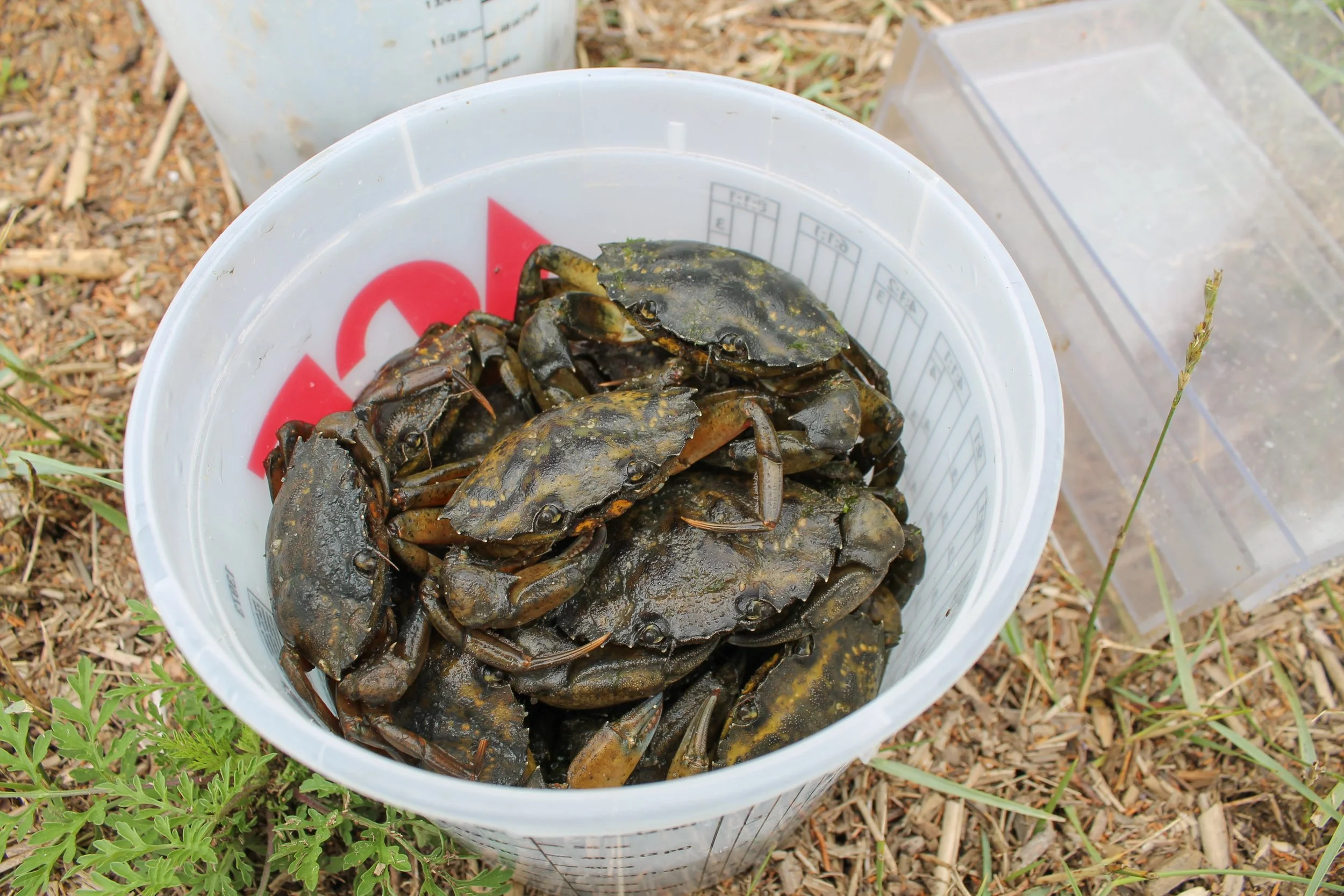
Green crabs trapped by CCS from Eastham Salt Pond
Q: This past June, you had a chance to attend the Green Crab Working Summit and learn more about emerging markets for the invasive. How could your work inform the development of commercial markets on the Cape and what were some questions you were asked during the research spotlight?
The Summit was such an incredible opportunity for us to connect with the people involved in green crab markets! I got multiple questions about recording and mapping carapace width, which I was told would be one of the most useful data points to better understand commercial viability. As a result of this feedback, I have begun plotting preliminary figures to track mean carapace width throughout the year, which could inform trapping efforts when targeting a specific size of crabs. Through discussions with shellfishermen and other stakeholders on the Cape, as well as previous CCS sampling in other locations, we have noticed a difference in yield at different sites on the Cape throughout the year. Developing a more detailed understanding of seasonal green crab patterns at different sites on Cape would help direct future trapping efforts to maximize the viability of a potential year-round market here.
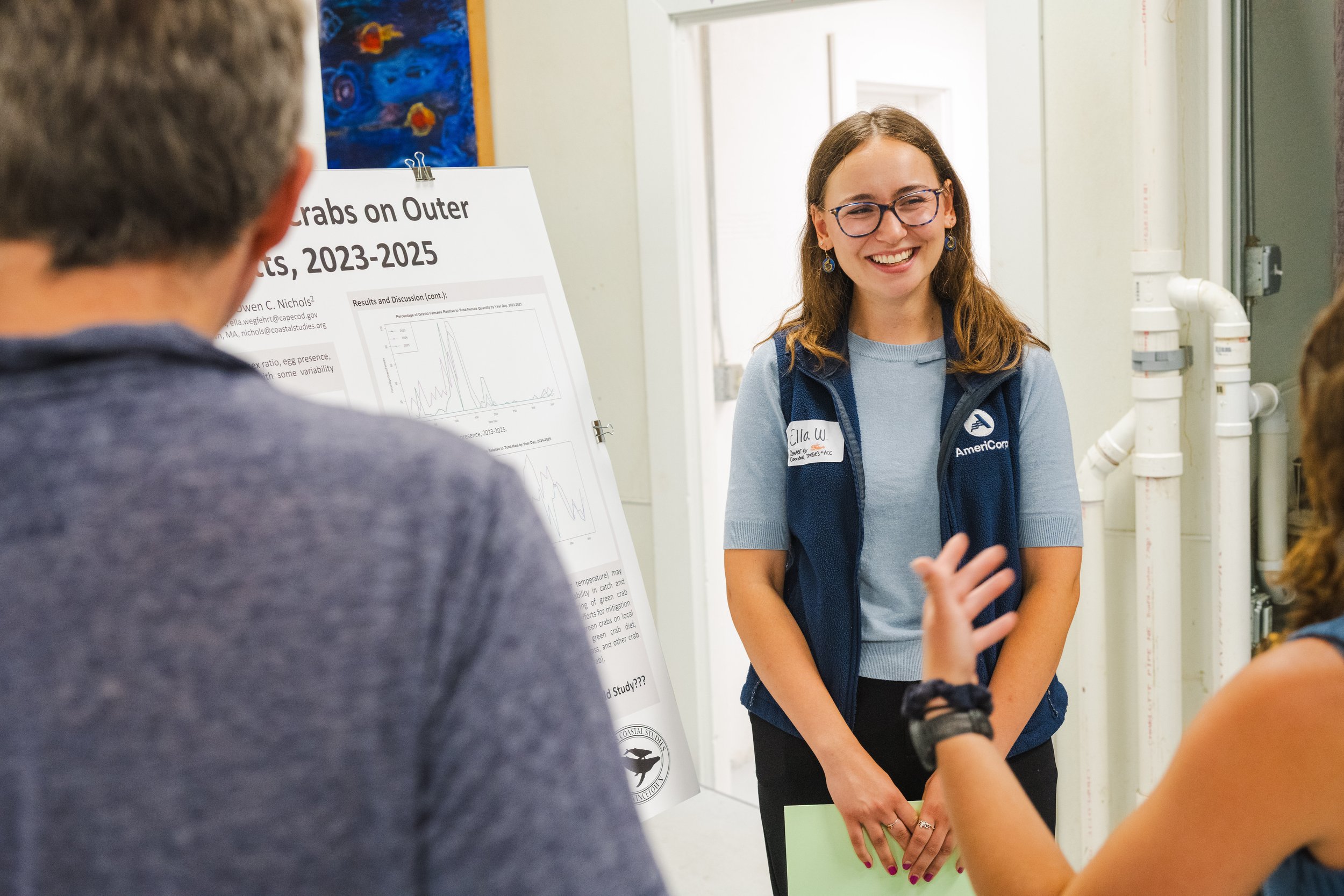
Ella at the Green Crab Working Summit Research Spotlight, photo by Tim Briggs